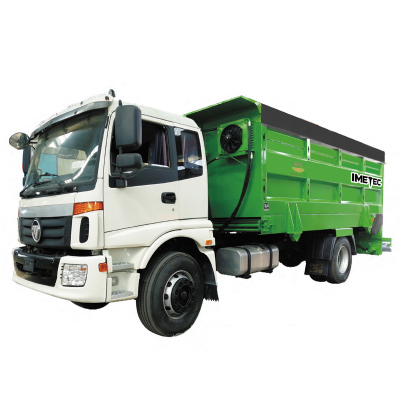
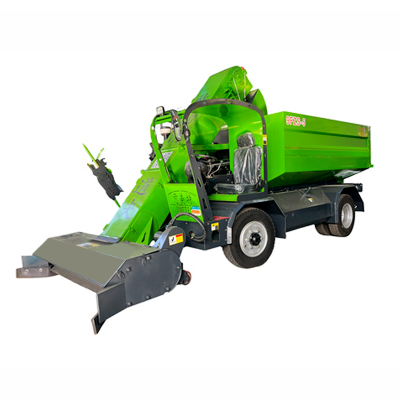
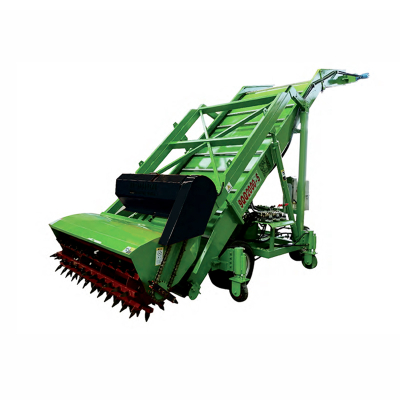
The main advantages of the Imetec multifunctional electric feed spreader
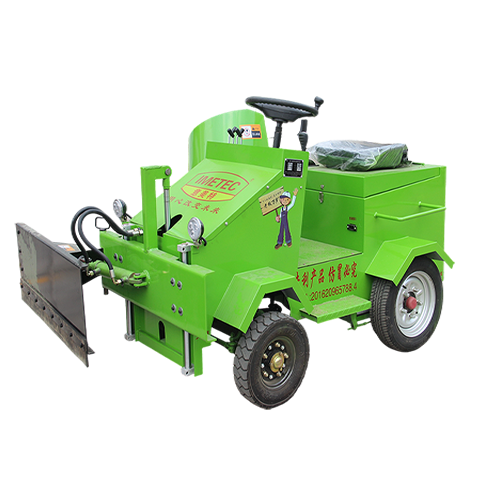
The Imetec multifunctional electric feed spreader, the preferred feeding equipment for medium and small farms, focuses on "green efficiency, flexibility, practicality, and high cost effectiveness." It integrates pure electric technology, a hydraulic system, and a human-centered design, making it ideal for dairy farms, beef farms, sheep farms, and other applications. Compared to traditional diesel spreaders and similar products, it offers significant advantages, helping farms reduce costs, increase efficiency, and improve feed quality. Its key benefits can be summarized as follows.
Pure electric and environmentally friendly, suitable for the environmental requirements of farms. The machine uses a pure electric drive without exhaust emissions, completely solving the problem of air pollution in barns caused by traditional diesel spreaders and the impact on animal health, meeting the environmental standards of modern farms. At the same time, the operating noise level is controlled below 65dB, and low noise operation can reduce the stress response of animals, ensure feeding efficiency and create a more comfortable breeding environment. In addition, the pure electric drive saves 60% more energy than diesel vehicles, significantly reducing daily farm energy costs and combining environmental friendliness and efficiency.
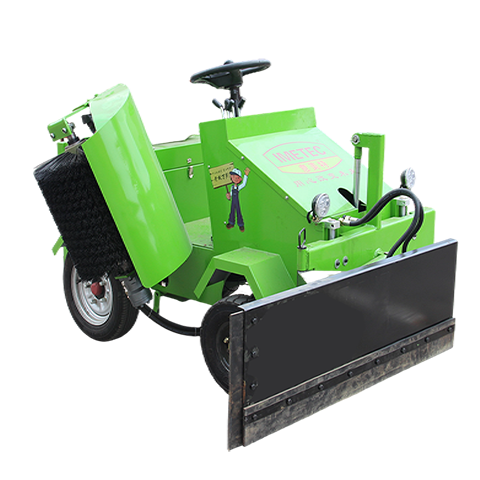
Flexible and convenient, it's suitable for a variety of farming scenarios. The machine's overall width is just 1.5 meters, combined with a compact chassis and flexible steering, resulting in a tight turning radius and easy maneuverability in old barns, narrow alleys, and other areas difficult for traditional equipment. It's suitable for alley widths of 1.6 meters or greater, without the need to modify existing farm structures. Controlled by a hydraulic handle with infinitely variable speed control, it requires no license or complex training; one person can quickly master the operation, significantly reducing the hiring threshold and management costs.
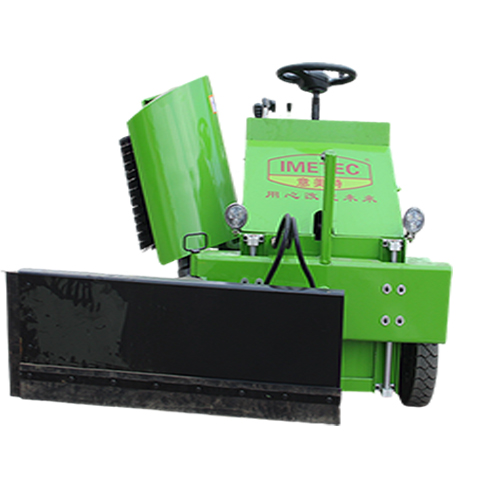
Sufficient power, more efficient feeding. Equipped with a specialized hydraulic system and three independent hydraulic cylinders, it has sufficient pushing force, with a single pushing weight of up to 300-500 kg, easily handling a variety of commonly used farm feeds, such as TMR feed and silage. The pushing bucket width is 1500 mm, and the height can be continuously adjusted from 0 to 450 mm. It not only completely clears feed residues from the feeder, reaching close to the ground to remove any remaining feed, but also adapts to the feeding needs of feeders of different depths, making trough alignment and feed pushing efficient and convenient.
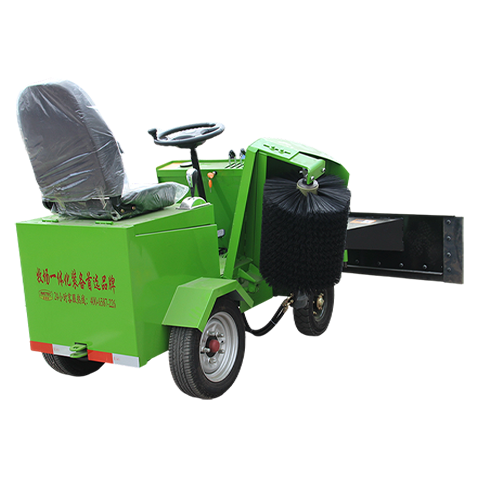
Multifunctionality in a single machine, highly cost-effective. Basic functions include pushing, leveling, and cleaning the feeder. It also has a rated towing capacity of 500 kg and can pull trailers, disinfection units, residual feed collection vehicles, and more. With the addition of additional accessories, it can also perform functions such as cleaning, spray disinfection, and plant patrolling. One machine can replace several traditional tools, significantly increasing equipment utilization and reducing farm equipment costs.
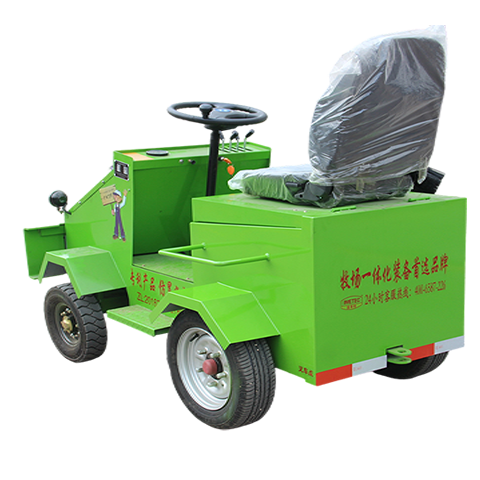
Durable and economical, it's more convenient for long-term use. Equipped with a 60V lithium battery, it provides a range of 80-100 km after a 6-8 hour charge, fully satisfying the needs of 24/7 farm operation. The body is built on a custom-made chassis, offering a robust design and a low failure rate. Daily maintenance is limited to regular checks of the battery, hydraulic oil, and tires—a simple and inexpensive process. Some models are eligible for agricultural machinery subsidies, further reducing the purchase price, ensuring a rapid payback period, and significant cost-effectiveness over the long term.
Overall, thanks to its key advantages—environmental friendliness, flexibility, efficiency, versatility, and cost-effectiveness—the Imetec multifunctional electric feed spreader precisely addresses key feeding challenges for medium and small farms. It not only improves feeding efficiency and reduces feed loss but also reduces labor and operating costs, becoming a powerful tool for modern medium and small farms in achieving cost reduction, increased efficiency, and precision feeding.